
Introduction

Learning how to choose a financial advisor is one of the most important money decisions you’ll ever make. Whether you’re planning for retirement, saving for your child’s education, or simply trying to organise a growing income, the right advisor can shape your financial future for decades. In India, where investment options range from mutual funds to real estate to insurance-linked products, picking someone trustworthy isn’t always straightforward. This guide breaks down exactly what to look for, what to avoid, and how to make a confident, informed choice.
Why Choosing the Right Financial Advisor Matters ?
A financial advisor isn’t just someone who picks stocks or mutual funds for you. They help you set goals, manage risk, plan taxes, and stay disciplined during market ups and downs.
The wrong advisor, on the other hand, can push products that earn them commissions rather than benefits for you. This is especially common in India, where many “advisors” are actually insurance or mutual fund distributors earning commission-based income.
Getting this decision right protects your savings, your retirement, and your peace of mind.
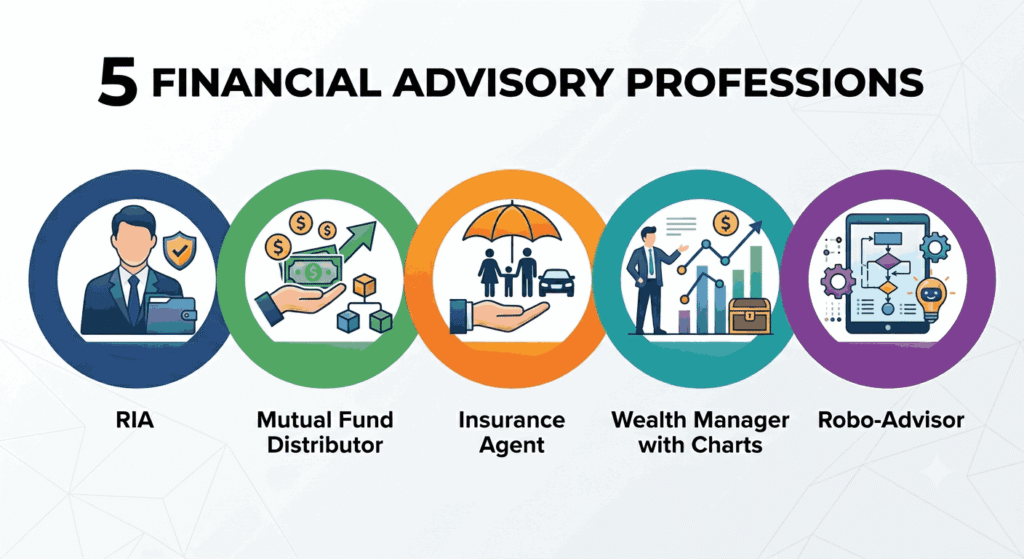
Types of Financial Advisors in India
Before you start your search, it helps to understand who you’re actually dealing with. India has several categories of financial professionals, and their roles differ quite a bit.
Registered Investment Advisors (RIAs)
RIAs are regulated by the Securities and Exchange Board of India (SEBI) and are legally required to act in your best interest. They typically charge a flat fee or a percentage of assets managed, not commissions.
Mutual Fund Distributors
These professionals earn commissions from fund houses when they sell you a product. They can offer useful guidance, but their recommendations may be influenced by which products pay them more.
Insurance Agents
Insurance agents sell policies and earn commissions on premiums. They’re useful for insurance planning but shouldn’t be your only source of investment advice.
Chartered Accountants and Wealth Managers
Many CAs and private wealth managers offer holistic financial planning, especially for high-net-worth individuals, often bundling tax, estate, and investment advice together.
Robo-Advisors
These are digital platforms that use algorithms to suggest portfolios based on your risk profile. They’re low-cost and convenient but offer limited personalisation for complex financial situations.
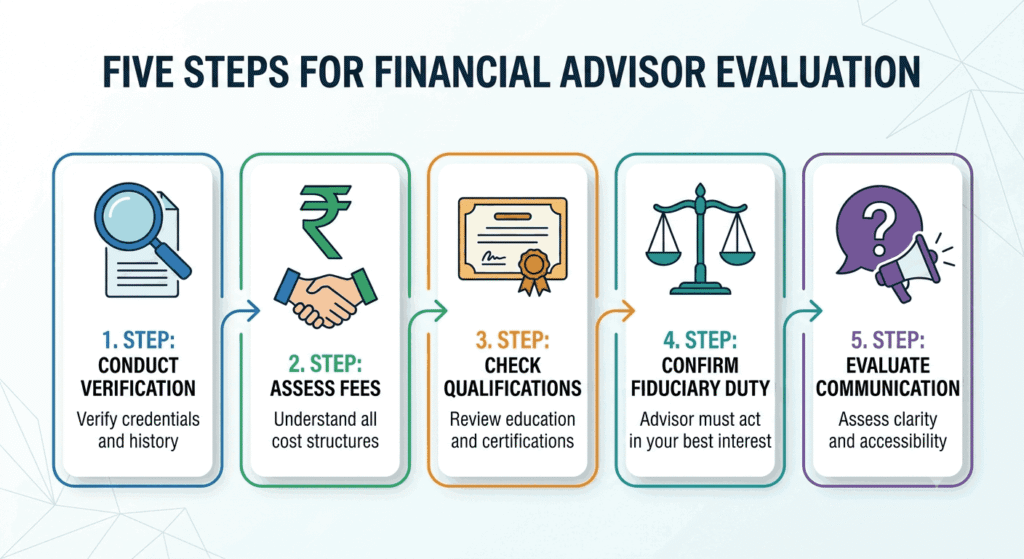
Step-by-Step: How to Choose a Financial Advisor
Check SEBI Registration
The very first thing to verify is whether the advisor is a SEBI-registered Investment Advisor (RIA). This registration means they’ve met regulatory requirements and are bound by a code of conduct.
You can verify any advisor’s registration number directly on the SEBI website before proceeding further. If someone calls themselves an “advisor” but can’t produce a valid registration number, treat that as a warning sign.
Understand the Fee Structure
Financial advisors in India typically charge in one of these ways:
-
- Fee-only: A flat fee or hourly rate, with no commissions from products sold
-
- Fee-based: A combination of fees and commissions
-
- Commission-only: Earnings come entirely from the products they sell
Fee-only advisors tend to have fewer conflicts of interest since their income doesn’t depend on which products you buy. Always ask for a clear, written breakdown of costs before signing anything.
Evaluate Qualifications and Experience
Look for recognised certifications such as:
-
- Certified Financial Planner (CFP)
-
- Chartered Financial Analyst (CFA)
-
- NISM certifications relevant to investment advisory
Experience matters too. An advisor who has guided clients through multiple market cycles, including downturns, tends to bring a steadier hand than someone newer to the field.
Assess the Advisor’s Fiduciary Approach
A fiduciary is legally obligated to act in your best interest, not theirs. Ask directly: “Are you a fiduciary, and will you put that in writing?”
If an advisor hesitates or gives a vague answer, that’s worth noting. Genuine fiduciaries are usually happy to confirm this in your advisory agreement.
Review Communication Style and Accessibility
Good advice means little if you can’t understand it. During your first meeting, notice whether the advisor:
-
- Explains concepts in plain language
-
- Listens to your goals before recommending products
-
- Responds promptly to questions
-
- Is willing to review your portfolio regularly
Financial planning is a long-term relationship, so comfort and clarity matter as much as credentials.

Red Flags to Watch Out For
Be cautious if an advisor:
-
- Guarantees high, fixed returns
-
- Pressures you to invest quickly
-
- Avoids discussing fees clearly
-
- Cannot produce SEBI registration proof
-
- Recommends only one company’s products
-
- Discourages you from reading policy or fund documents
Any of these behaviours should prompt you to pause and look elsewhere.
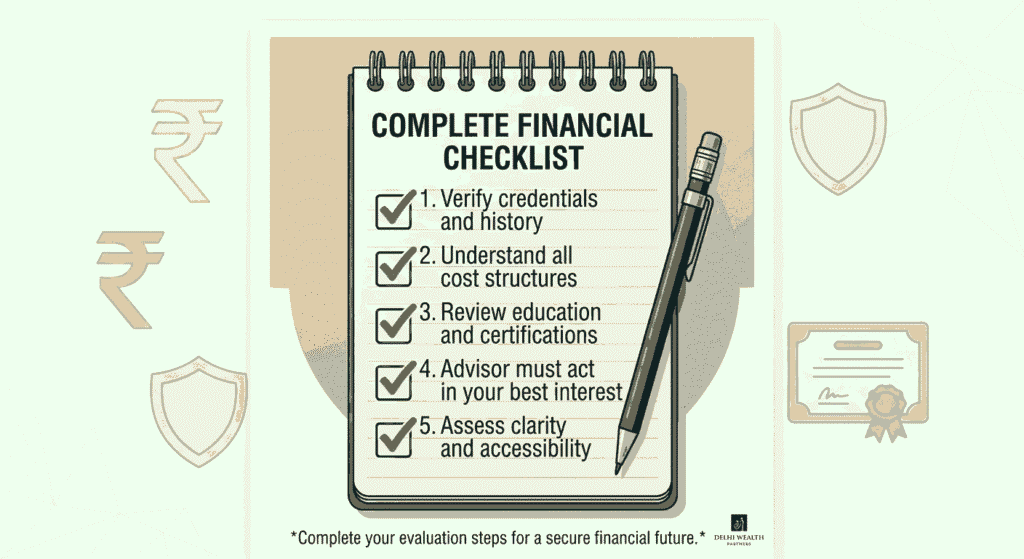
Questions to Ask Before Hiring a Financial Advisor
Bring this list to your first meeting:
-
- Are you registered with SEBI, and can I see your registration number?
-
- How do you get paid — fees, commissions, or both?
-
- What is your investment philosophy?
-
- Can you share references from long-term clients?
-
- How often will we review my portfolio?
-
- What happens if I want to end our arrangement?
-
- Do you specialise in my specific financial situation (retirement, NRI investing, business owners, etc.)?
Their answers will tell you a lot about their transparency and professionalism.
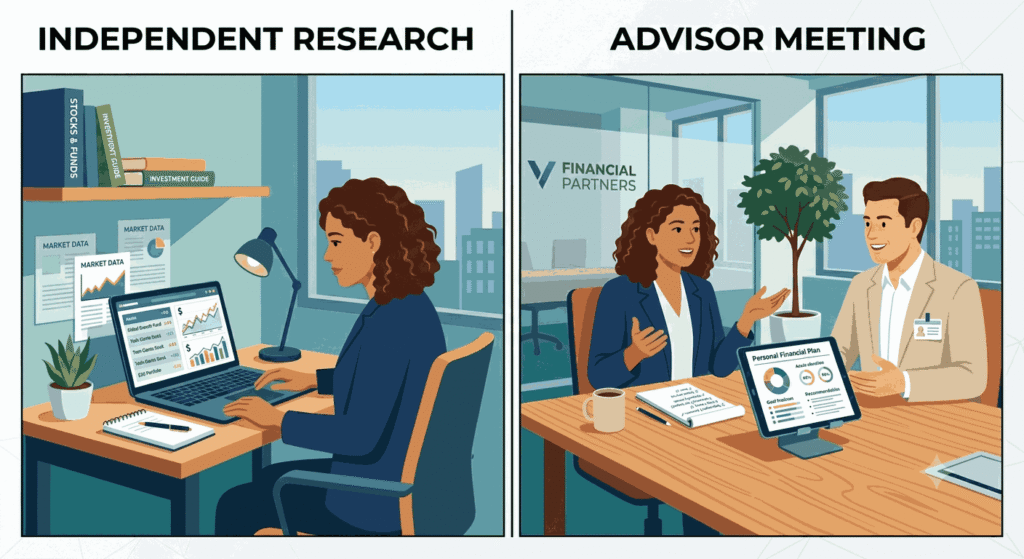
DIY Investing vs. Hiring an Advisor
Not everyone needs a financial advisor. If your finances are simple and you enjoy researching investments, low-cost index funds and robo-advisors might suffice.
However, an advisor becomes valuable when you have:
-
- Multiple income sources or complex tax situations
-
- Significant assets to manage
-
- Major life transitions (marriage, inheritance, retirement)
-
- Limited time or interest in managing investments yourself
There’s no universally right answer here. It depends on your comfort level, complexity, and how much time you’re willing to invest in learning

-
- Always verify SEBI registration before trusting anyone with your money
-
- Understand exactly how your advisor gets paid
-
- Fee-only, fiduciary advisors generally have fewer conflicts of interest
-
- Watch for red flags like guaranteed returns or pressure tactics
-
- Ask direct questions and expect clear, written answers
-
- Not everyone needs an advisor — assess your own complexity and comfort level first
Conclusion
Choosing a financial advisor is ultimately about trust, transparency, and fit. Take the time to verify credentials, ask direct questions about fees, and pay attention to how clearly they communicate. A good advisor won’t just manage your money — they’ll help you understand it.
Ready to take the next step? Start by shortlisting two or three SEBI-registered advisors, schedule introductory calls, and compare their answers to the questions listed above before making your final decision.